






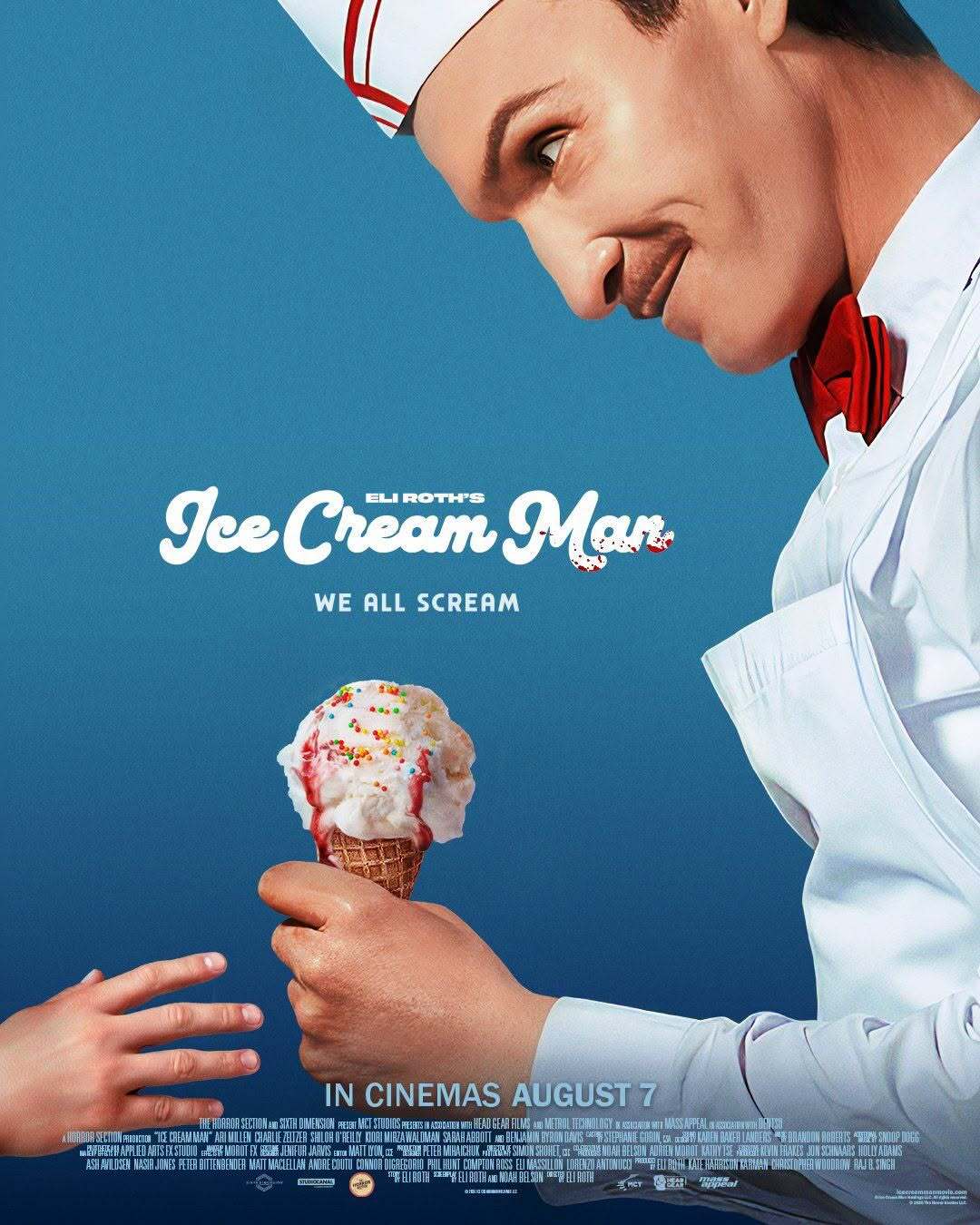
Eli Roth’s “Ice Cream Man” and the Return of Dangerous Horror
For years, horror fans have watched Eli Roth navigate the strange new world of studio filmmaking — a world where the monsters are big, the budgets are bigger, and the edges get sanded down until the danger feels… safe. But with Ice Cream Man, Roth is stepping out of the corporate glow and back into the shadows where his career was born.
This isn’t just a movie. It’s a cultural correction.
Roth has always thrived in the space where horror feels a little too real, a little too loud, a little too unhinged. But the modern studio system doesn’t reward that kind of chaos. It rewards predictability. It rewards “four‑quadrant appeal.” It rewards horror that behaves.
Ice Cream Man is Roth refusing to behave.
The film — unrated, independently financed, and proudly feral — taps into a very specific cultural itch: the hunger for horror that isn’t afraid to be horror. The story of a neighborhood ice‑cream vendor whose treats turn kids into pint‑sized killers is absurd, grotesque, and exactly the kind of concept that would never survive a studio notes meeting. And that’s the point.
Roth isn’t chasing a blockbuster. He’s chasing ownership.
By building the film outside the system — foreign presales, tax incentives, a lean budget — Roth is reclaiming something horror filmmakers have been losing for years: control. In an era where streaming has flattened residuals and turned films into disposable content, Ice Cream Man is Roth planting a flag for the creators who still want to make something that feels dangerous.
The cultural significance isn’t just in the movie itself. It’s in the model.
Roth’s new banner, The Horror Section, aims to release a steady flow of low‑budget, high‑freedom projects. It’s a return to the ethos that built the genre: scrappy filmmakers, wild ideas, and movies that don’t need permission to be weird.
Horror has always been at its best when it’s allowed to misbehave. Ice Cream Man is Roth reminding the industry — and the audience — that the genre doesn’t need to be polite to be powerful.
It just needs to be free.